For human resources
Complaints reach HR first. The law says what to do with them
Not every report comes through the channel. When one reaches your desk, the law asks for confidentiality, immediate forwarding and very limited access to the data.
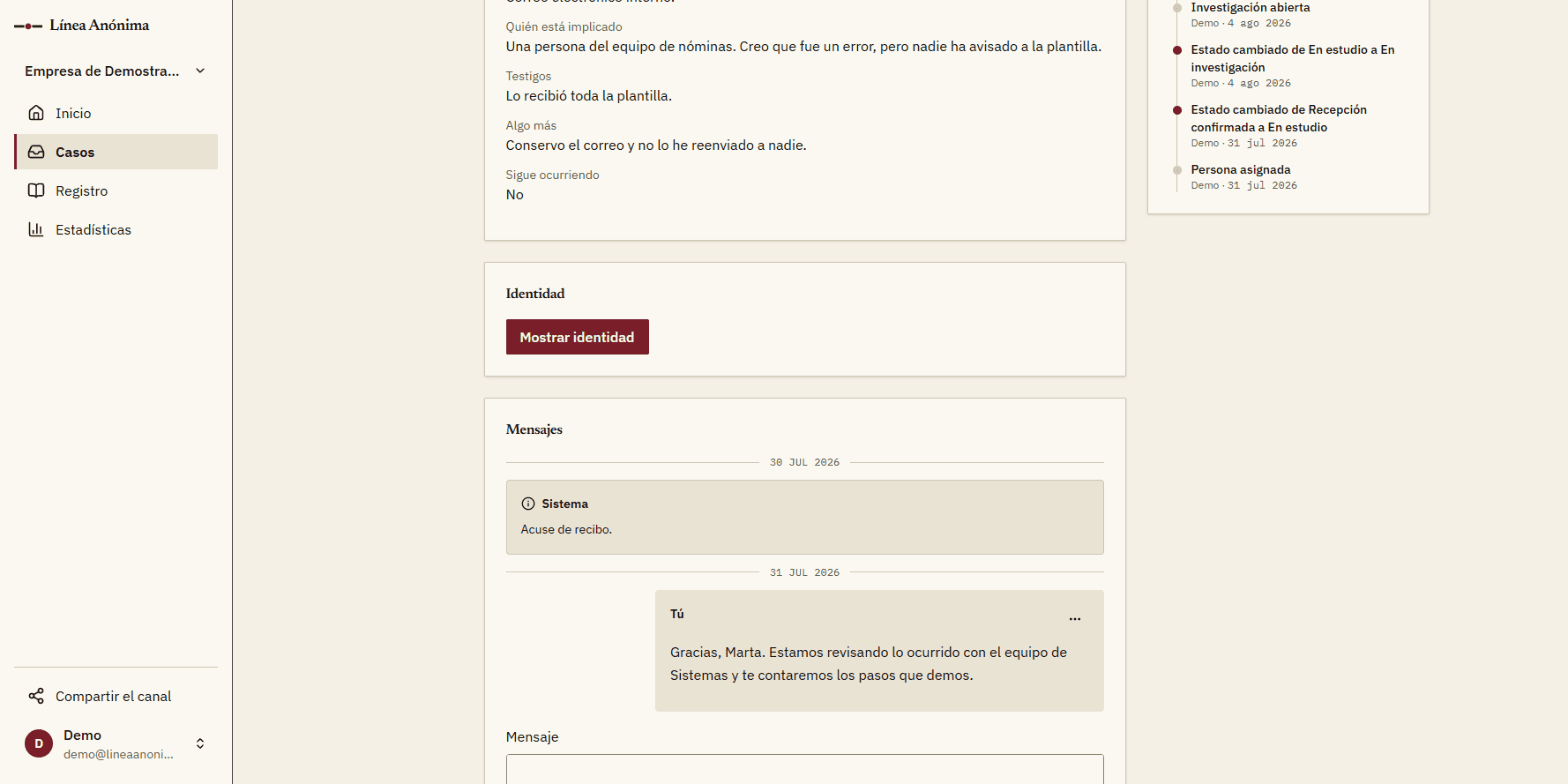
The acknowledgement and your replies to the reporter stay inside the case, next to internal notes and the history.
What the law asks of you
Five obligations that directly affect your department.
- Art. 9.2.gIf a report arrives through an unintended channel or to staff who are not responsible for handling it, confidentiality must be kept and it must be forwarded immediately to the System Manager.
- Art. 32.1The HR manager (or the designated body) may only access the system's data where disciplinary action against an employee may follow.
- Art. 33.3The reporter's identity may only be disclosed to the courts, the public prosecutor or the competent administrative authority.
- Art. 36Retaliation against reporters is prohibited, including threats and attempts. Retaliation includes, among other things, dismissal, suspension of the contract, coercion, intimidation, harassment or ostracism.
- Art. 5.1Before setting up the system, workers' legal representatives must be consulted.
How Línea Anónima helps
Each case is seen only by those who should see it
Permissions by role and by case, so HR gets access only when appropriate and every access is logged.
A channel that isn't only for employees
The law also protects candidates, interns, former employees and people at suppliers. A public access page lets them report.
Fewer spreadsheets
Deadlines, acknowledgements and the register in one place, instead of manual tracking.
Common questions from HR
In the private sector, the Manager must be an executive who carries out the role independently of the administrative body. It can be the HR executive if conflicts of interest are avoided (art. 8.5), and also a person who is already responsible for regulatory compliance (art. 8.6). Each company should assess this with its adviser.
Not necessarily. The law requires the system to integrate the different internal channels that exist in the entity (art. 5.2.d), an idea the AIPI's Recommendation 1/2026 sums up as a "single window". Confirm how your protocol fits with your adviser.
The law's protection covers the breaches in its article 2. Complaints that don't fit can be handled through another route. Decide with your adviser how to separate them.
Let's talk about your HR case
We'll show you how the flow would look, from report to register.